Control delivers supernatural third-person action in a shifting headquarters
Control, from Remedy Entertainment, casts you as Jesse Faden, the newly appointed Director of the Federal Bureau of Control confronting a reality-threatening Hiss and investigative mystery. The game blends third-person action with paranormal combat, weapon customization, and exploration inside a shifting headquarters; progression depends on unlocking new powers and upgrades. Architectural atmosphere, environmental storytelling, and physics-driven encounters form the core appeal, rooted in the Remedy Connected Universe for players who favour discovery-focused single-player campaigns.
What kind of game is Control?
So, you step into a secretive agency under siege, and the environment itself changes in response to events. The game is a supernatural third-person action-adventure that asks you to reclaim a corrupted headquarters while peeling back layered narrative threads. Progression combines exploration with ability acquisition through bound Objects of Power, making exploration and the story the principal engines that push you from sector to sector.
How do powers and weapons change combat encounters?
Thus, combat depends on near-total environmental interaction powered by a sophisticated physics engine: almost any object can become a projectile in a firefight. Players unlock named abilities and can bind Objects of Power to gain telekinetic and mobility tools. The Service Weapon changes forms and accepts modular upgrades, so encounters reward combining weapon forms with ability synergies and improvising with the environment.
What does the game look and sound like?
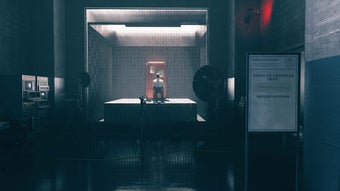
The title foregrounds brutalist architecture and surreal interior design to sustain tension and mystery. Sparse audio design and unsettling cues support the New Weird tone, while level geometry deliberately warps as you move through zones. PlayStation 4 Pro delivers more stable presentation, and the game is playable on later hardware via backward compatibility; on base PlayStation 4 some players noted framerate and pacing inconsistencies at launch.
Is it hard to get started?
Some sections demand patient mapping and backtracking because the layout follows Metroidvania principles: locked routes and hidden shortcuts encourage return visits. Ability gains come through binding Objects and opening upgrade slots, and Service Weapon customization adds incremental choices rather than instant power spikes. Thus, the initial learning curve centres on reading environments, choosing upgrades, and learning how physics-based interactions change each encounter.
Control is a focused choice for players who follow Remedy's narrative ambitions
The game suits players invested in interconnected, story-led action and atmospheric world-building, supported by Remedy's studio pedigree and a catalogue of industry recognition. It earned wide critical praise and many awards, which underscores its strengths in design and tone; note that its narrative density and exploratory demands favor longer, attentive play sessions over casual pick-up-and-play bursts.